We help women with:

Leakage of urine when you cough, sneeze, laugh or exercise
A feeling of heaviness, pressure or something coming down in your pelvis
Pain in the tailbone, lower back or pelvis — during or after pregnancy
A gap or bulge in the middle of your tummy (abdominal separation)
Pain or discomfort during intimacy
Difficulty returning to exercise after delivery without leaking or discomfort
A sudden strong urge to urinate that is difficult to control
Chronic pelvic pain or painful periods with no clear diagnosis
Chronic pelvic pain, painful intercourse, painful periods
Pelvic floor, core, and scar rehabilitation after vaginal or caesarean delivery
Learn More →Pelvic floor changes with hormonal shifts, age-related weakness and prolapse
Female therapist for all pelvic rehabilitation sessions
Private consultation rooms — complete confidentiality
Individualised treatment plans — no generic protocols
One-to-one sessions throughout your rehabilitation
Evidence-based physiotherapy approach
Integrated mental health team — counsellor & clinical psychologist on staff
Somajiguda, Hyderabad — accessible from Banjara Hills, Jubilee Hills, Ameerpet
No referral needed — book directly
Each pillar addresses a different dimension of pelvic health. Together they produce results that single-discipline treatment rarely achieves on its own.
Assessment and treatment of the pelvic floor muscles, connective tissue, and surrounding structures. We identify whether muscles are too weak, too tight, or poorly coordinated — and treat accordingly with manual therapy, biofeedback, and targeted rehabilitation.
Structured, progressive exercise programmes designed for the pelvic floor and core. Specifically sequenced movements that rebuild strength and functional control — not generic exercises that could aggravate symptoms.
Chronic constipation, straining, inflammatory foods, and hydration directly affect bladder, bowel, and pelvic floor function. Our nutrition guidance is practical, Indian-diet friendly, and specific to your pelvic concerns.
Used alongside physiotherapy for pelvic pain, bladder urgency, and postpartum recovery. Supports pain relief, nervous system regulation, and tissue healing — particularly for conditions where chronic tension is a component.
Chronic pain, postpartum body changes, and the psychological weight of conditions that feel too private to discuss — these affect recovery in measurable ways. Ataha Wellness has counsellors and a clinical psychologist as part of our core team. Where relevant, mental health support is integrated directly into your rehabilitation plan — not a referral elsewhere, but part of your care here.
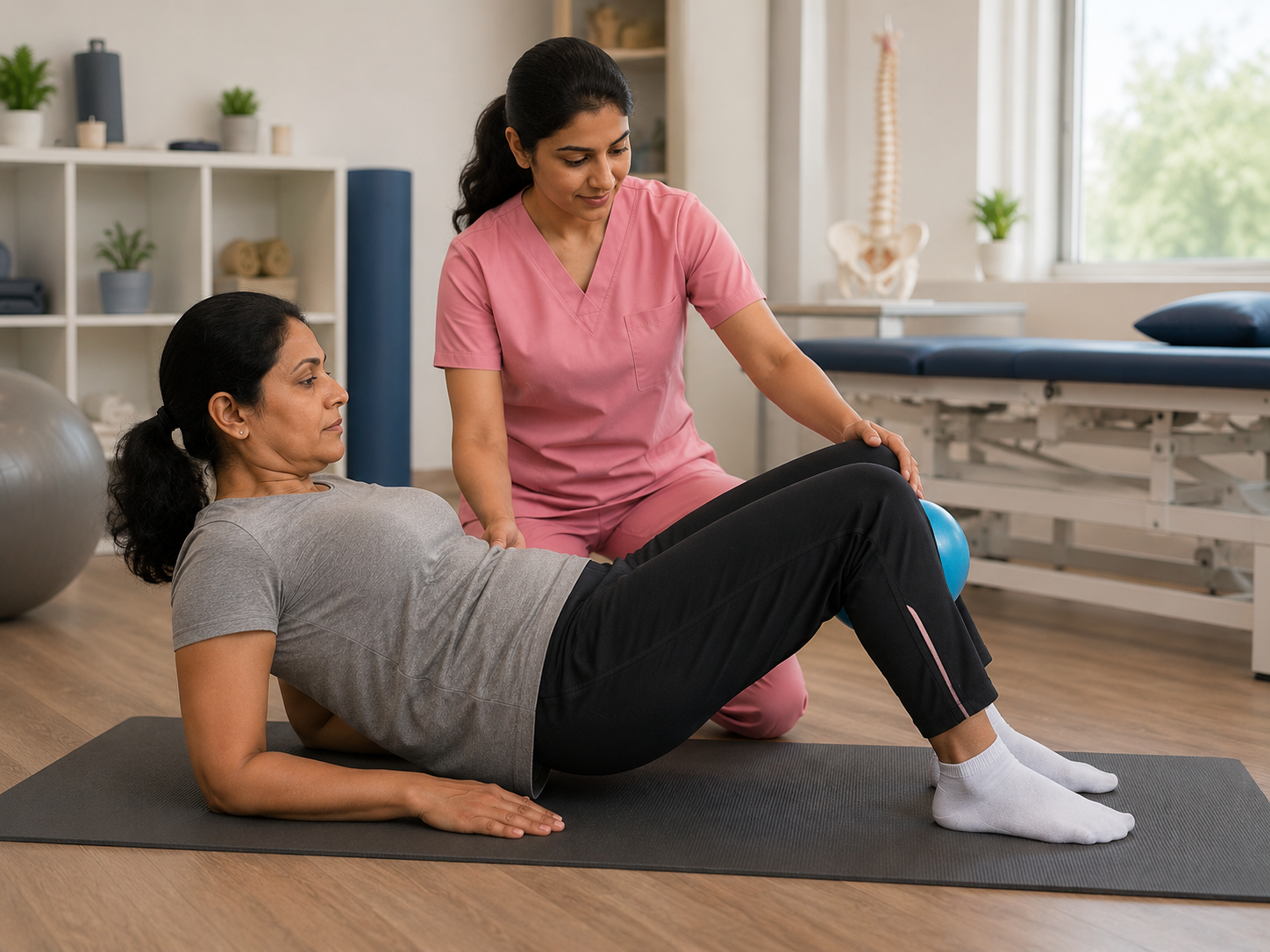
Pelvic floor recovery after vaginal or C-section delivery, diastasis recti, incontinence, returning to exercise safely
Prolapse management, recurrent UTI, pelvic pain, painful intercourse, core dysfunction from previous pregnancies
Hormonal changes affecting pelvic tissue, urgency incontinence, prolapse, osteoporosis-related core weakness
A thorough assessment of your pelvic floor, core, posture, and history. Private room, female therapist. Nothing you describe will be surprising — we see this every day.
Based on findings, we design a plan drawing from whichever of the five pillars are relevant to your condition. You are told what it involves and how long it will take before we begin.
Weekly or bi-weekly sessions with measurable progress markers. You will know what you are working toward and when you are getting there.
We give you the tools to manage independently. Once you have achieved your goals, maintenance requires a short daily routine — not ongoing clinic visits indefinitely.
Female pelvic rehabilitation is a specialised form of physiotherapy that addresses problems with the pelvic floor muscles, connective tissue, and surrounding structures. It treats conditions such as urinary incontinence, pelvic organ prolapse, pelvic pain, diastasis recti, and postpartum recovery — using physiotherapy, exercise therapy, nutrition, acupuncture, and mental health support as needed.
Yes. Urinary leakage is one of the most successfully treated conditions in pelvic rehabilitation. Most women see significant improvement within 8–12 weeks of targeted pelvic floor physiotherapy. Surgery is rarely the first option — physiotherapy is the evidence-based first-line treatment recommended before any surgical intervention.
Gentle pelvic floor rehabilitation can begin as early as 6 weeks postpartum after vaginal delivery, or 8–12 weeks after C-section once the wound has healed. Starting early improves outcomes significantly. Many women wait months or years — this only makes recovery longer.
Treatment should not be painful. There may be mild discomfort during assessment of tight or tender areas, which is normal and temporary. Your comfort is a priority throughout every session. We explain what we are doing and proceed at a pace you are comfortable with.
This depends on the condition and severity. Simple cases such as mild stress incontinence may resolve in 6–8 sessions. More complex conditions like prolapse or chronic pelvic pain typically require 12–16 sessions. We give you a realistic estimate after the initial assessment — we do not run open-ended courses.
No. You can book directly without any referral. If your condition requires co-management with a gynaecologist or specialist, we will advise you during the assessment.
No. We treat women of all ages — including those who have never been pregnant, and older women experiencing prolapse or incontinence related to menopause and ageing. Childbirth is one cause of pelvic floor problems, but not the only one.
Yes. All consultations are in private rooms. Your history and treatment details are not shared without your explicit consent. We treat many women with conditions they have not discussed with family members — confidentiality is taken seriously.
In many cases, yes. For stress urinary incontinence, pelvic organ prolapse, and certain pelvic pain conditions, physiotherapy is the recommended first-line treatment before surgery is considered. Many women achieve full resolution with conservative rehabilitation. We will tell you honestly if your condition requires surgical review.
Yes. All pelvic rehabilitation sessions at Ataha Wellness are conducted by female therapists. We understand this is important for many women and have structured our team accordingly.
Diastasis recti is the separation of the abdominal muscles that commonly occurs during pregnancy. It causes a visible belly bulge, lower back pain, and core weakness. It is very treatable with targeted physiotherapy and exercise rehabilitation — surgery is very rarely necessary.
Pelvic floor physiotherapy is a specialisation within physiotherapy requiring additional training in assessment and treatment of pelvic floor dysfunction. Not all physiotherapists are trained in this area. At Ataha Wellness, our pelvic rehabilitation team has specific training in this field.
Book an assessment. We will tell you honestly what we can help with — and what we cannot.
Book an AssessmentWhatsApp us directly or leave your number and we'll call you back.
Opens WhatsApp instantly
We'll call you within a few hours